


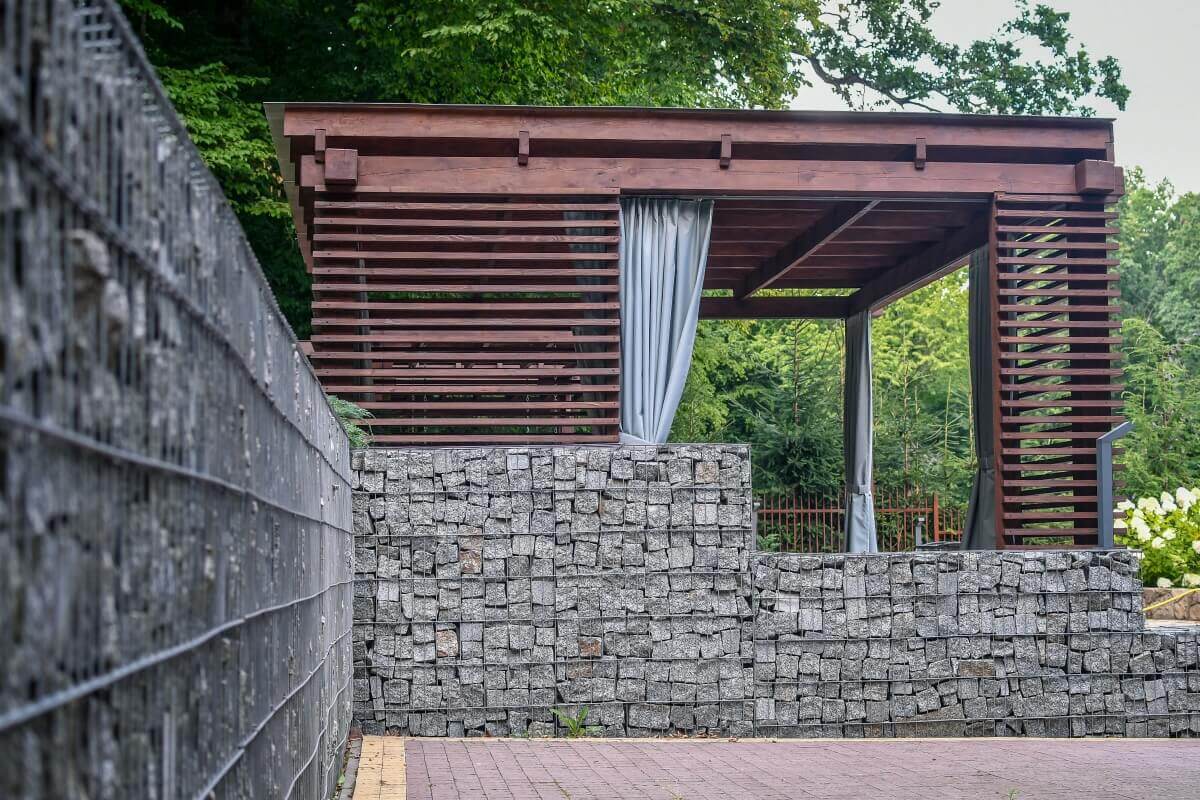
Yes, wooden garden shutters are suitable for a humid climate provided they are made from stable, structurally dried timber, have ventilation gaps and a water- and UV-resistant coating. It is crucial to allow a gap of 2–4 mm between the slats and to ensure the bottom edge is a few to a dozen or so millimetres above the floor to prevent water from being drawn in. Durability is also determined by installing the structure with adequate ventilation and without pockets where water can collect, as well as by using stainless steel fittings and screws, which do not corrode or stain the wood.
Are wooden garden blinds a good choice in areas with high humidity and frequent rainfall?
Wooden garden shutters can work very well in a damp climate, provided they are made from the right type of wood, are correctly constructed and are regularly treated. In practice, most problems do not stem from the damp itself, but from mistakes: gaps that are too narrow, poor drainage and inadequate waterproofing.
Dąb Gaj Wood designs these covers with real-world outdoor conditions in mind: rain, fog, shaded terraces and wind.
If you’re thinking about covering a terrace, pergola or balcony recess, start by understanding how timber behaves when exposed to moisture and how the structure counteracts this. That’s precisely why wooden garden blinds It is worth choosing them not only for their appearance, but also for their orientation, ventilation and method of installation, as these factors determine whether the roller blind will operate smoothly and without jamming for years to come.
Won’t wooden garden shutters warp or rot in a damp climate?
No, wooden garden shutters do not have to warp or rot if they are made from carefully selected timber, have the correct expansion gaps and are protected with a water- and UV-resistant coating. A damp climate is challenging but predictable: wood swells when it absorbs moisture and shrinks when it dries out, so the design must take this into account.
The most common causes of problems are a lack of space for the wood to expand and contract, and persistent damp at the points where the slats meet. If the slats are crammed together or the roller blind is standing in a puddle by the floor, even the best coating won’t last long.
In a well-made roller blind, working gaps of around 2–4 mm are left (depending on the width of the blind and its exposure), and the bottom of the blind is kept a few to a dozen or so millimetres above the floor to prevent it from drawing in water.
What really helps in a humid climate:
- Ventilation behind the roller blind: leaving a gap between the blind and the wall or other fixtures reduces condensation and helps it dry out more quickly after rain.
- Water drainage: the lower edges and joints must not form pockets where water collects after heavy rain.
- Protective coating: oil-wax or outdoor-grade oil reduces moisture penetration and stabilises the wood.
If the roller blind is in the shade (facing north, under an overhang, or near dense foliage), moisture lingers for longer. In such places, it is essential that the wood is allowed to dry out, rather than being sealed tightly away as in a box.
Which type of wood is best suited to wooden garden blinds in terms of moisture resistance?
Wooden garden shutters withstand damp best when they are made from dimensionally stable, properly kiln-dried timber, rather than random pieces of joinery timber. The most important factors are: the quality of grading, laminated construction (where applicable), the moisture content of the material and the grain direction in the components.
In practice, you will come across two approaches. The first is KVH-grade structural timber, which is kiln-dried and planed, making it less prone to warping. The second is BSH laminated timber (e.g. GL24), which is even more stable and works very well in load-bearing and framing elements, particularly when the roller shutter forms part of a larger terrace structure.
When it comes to the slats and battens themselves, the species matters too. In a humid climate, species with decent natural durability and stability perform well, but the geometry of the component is equally important. Typical cross-sections that work well in roller blinds are slats around 18–28 mm thick and 60–120 mm wide (depending on the system and span).
A plank that is too wide in one piece is more likely to snag the boat, whilst one that is too thin may warp.
It is also worth bearing in mind the guide rails and frame. For larger openings (e.g. 2.0–2.5 m high), the frame and guide rails should be rigid enough to prevent the roller blind from behaving like a sail.
In practice, cross-sections of around 40×60 mm or larger are often used for frames, and for large panels, additional stiffeners are added to ensure that the mechanism operates smoothly even after rain, when the wood swells slightly.
How should wooden garden roller blinds be installed to ensure they operate smoothly for years to come in a damp climate?
Wooden garden roller shutters in a damp climate should be fitted in such a way that they do not come into constant contact with water and that the mechanism allows for seasonal movement of the wood. The positioning of the guides, the distance from the floor and correct levelling are crucial, as even the slightest warping of the structure in damp conditions will quickly manifest as rubbing or jamming.
First, a practical definition: a good installation of an external roller blind is one where the blind still operates smoothly after a downpour, and does not start to rub against the guides after a week of damp conditions. To achieve this, I pay attention to three things.
- Clearance from the floor and drainage: the lower edge must not be submerged in water; leave a gap and ensure the floor slopes so that water can drain away.
- Working clearances and guidance: the guides must not pinch the components; it is better to allow a minimum amount of play and ensure smooth guidance than to have a tight fit with the risk of swelling.
- Fasteners and fittings: corrosion-resistant components (e.g. stainless steel) are used, as ordinary screws quickly develop a tarnish in damp conditions and stain the wood.
It’s also worth considering the wind. In a humid climate, it often comes with gusts. If the roller blind is to serve as a side screen for the terrace, it is a good idea to include a position lock or a solution that reduces flapping. This not only ensures comfort but also reduces wear and tear on the mechanism.
In terms of cost, installation depends on the dimensions and the level of complexity. For typical patio screens, in practice, the price range for manufacture and installation (depending on the system, the number of panels/segments and the finish) often starts at a few thousand zlotys for a smaller module and increases with the size and the level of automation.
For larger projects, it is usually more cost-effective to design the whole structure as a coherent system incorporating a pergola or other built-in features, as this makes the routing and bracing more predictable.
How should you maintain wooden garden shutters when the air is damp?
Wooden garden shutters in a damp climate need to be maintained regularly, but without going overboard: an end-of-season check-up and a fresh coat of paint every 1–2 years is usually sufficient, depending on exposure to sun and rain. Moisture on its own does not damage wood as quickly as the combination of moisture, dirt and a lack of ventilation.
Maintenance starts with simple habits. Every now and then, rinse the roller blind with water and remove any build-up in places where dust and pollen accumulate, as these are the areas that retain moisture for the longest. Then check the bottom edges and the areas around the guides: if the coating has worn away in any places, don’t wait until spring – just touch it up where necessary.
If the roller blind is protected by an oil-based system designed for outdoor use, restoration is usually straightforward: cleaning, a light sanding where necessary, and a thin coat of the product. In practice, the service life of a well-made and regularly maintained roller shutter is easily 10–15 years or more, and the mechanism can last a long time provided it is not overloaded by swollen or compressed components.
In damp areas, look out for two warning signs: the roller blind starts to move more sluggishly after rain, and a black film appears in the nooks and crannies. The first usually indicates insufficient play or a problem with the alignment of the guides, whilst the second points to dirt and prolonged dampness. This can be managed if you act straight away, rather than waiting several seasons.
If you want to choose a solution tailored to a specific aspect of the world, protection from the wind and how the terrace will be used, it is best to approach the matter as a structural element rather than a decorative feature.
The manufacturer’s adviser will help you choose the material, finish and installation method to ensure that your wooden garden roller blinds function reliably even in conditions of frequent rainfall and high humidity — please contact Dąb Gaj Wood.
Read also: Why is it worth installing wooden patio pergolas yourself?
Frequently asked questions
How long does it take to make made-to-measure wooden blinds for a high-humidity area?
The lead time depends on the dimensions, the number of segments and the chosen track system, but it usually takes several weeks from measurement to installation. In a damp climate, it is worth allowing extra time for the components to be properly prepared and finished with an external coating, rather than rushing the installation. The quickest way to ensure a smooth installation is to provide photographs of the installation site and give approximate dimensions at the enquiry stage.
How do you prepare the base and drainage so that the roller blind doesn’t stand in water?
The most important thing is to ensure that no puddle forms at the bottom edge of the decking, so the ground should slope to allow water to drain away. A gap is also left between the decking and the ground, usually a few to a dozen or so millimetres, to prevent the timber from absorbing moisture. If the decking is shaded and remains wet for long periods, it is also worth ensuring there is ventilation behind the decking, for example by leaving a gap between it and the wall.
Does a humid climate require more frequent oiling, and how often should this be done?
In most cases, it is sufficient to refresh the coating every 1–2 years, but in areas heavily exposed to rain and with little sunlight, it is worth checking it after each season. If the coating is worn away near the guides or on the lower edges, it is better to touch it up immediately rather than wait until a full refurbishment is required. Regular cleaning to remove grime and dirt significantly extends the life of the protective coating, as dirt retains moisture for the longest time.
What fittings and screws should I choose to ensure they don’t rust or stain the wood?
In a damp climate, it is advisable to use corrosion-resistant fasteners and fittings, usually made of stainless steel, as ordinary screws can quickly develop a rust film. Rust not only weakens the joints, but also stains the wood and makes subsequent maintenance and repainting more difficult. The choice of fittings should go hand in hand with correct installation, so that the components are not subjected to excessive stress when the timber swells slightly after rain.
Is it possible to choose the colour and dimensions of the roller blinds so that they cope better with rain and shade?
Yes, because in damp and shaded areas, it is not only the appearance that matters, but also the geometry of the components and the operational clearances, which minimise warping after rain. When selecting dimensions, one should avoid single-piece slats that are too wide, whilst for larger openings, a sturdier frame and guides are designed to prevent the roller blind from flapping in the wind. The colour and finish can be matched to the terrace, but it is crucial to use an exterior coating that is water- and UV-resistant and can be easily refreshed.